Case File 07 of 10
1970s-2010sCritical pedagogy and the schoolsThe road that kept teaching

Tom Hayden forecast in 1966 that the insurgency would spread through the professions as student activists finished their degrees and went to work. In the education faculties that forecast has a paper trail, because the people who did the work wrote down what it was for.
The students who took Hayden's road became professors of education. The professors trained teachers. The teachers taught children.
None of that required coordination, or even agreement. It required only that the accredited programs teach the framework, and Giroux named the leverage when he pointed at certification.
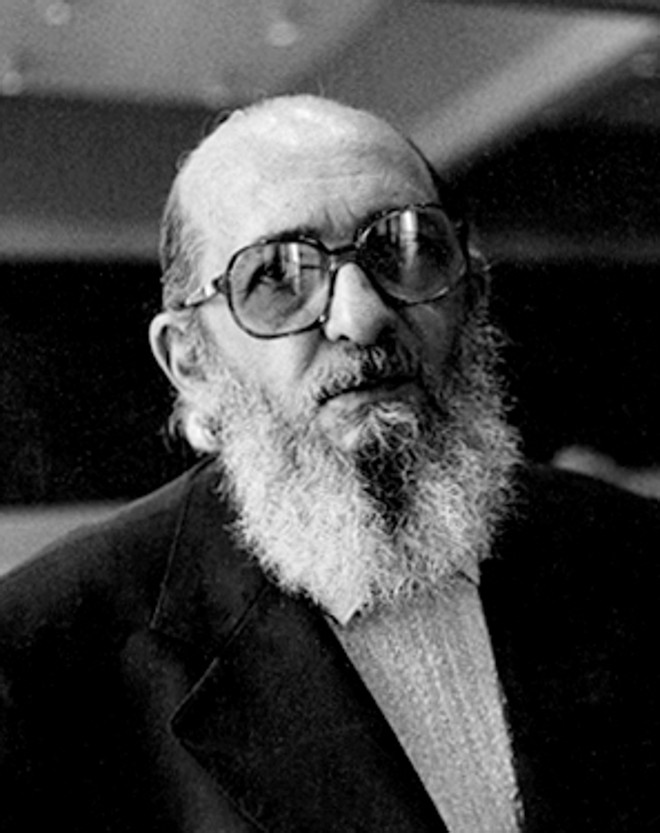
In the education faculties, scholars built a literature that stated its purpose without embarrassment. Paulo Freire was the Brazilian Marxist whose work sits behind much of American critical pedagogy. He wrote that the oppressed "need to organize in a revolutionary manner and to transform the real world in a revolutionary manner," that after the revolution succeeds "conscientization continues to be indispensable," and that cultural action for freedom "must then transform itself into permanent cultural revolution."1 Freire is saying that raising consciousness never ends, and that cultural action goes on after the revolution wins.
Henry Giroux located the work, writing that radical teaching takes place
"within institutions that serve the interests of the state. These are formal institutions directly or indirectly linked to the state through public funding or through certification requirements."2
Giroux treats that as the ground the work is done on.
The most revealing sentence in that literature is a complaint from inside it. Peter McLaren is one of the field's leading figures. He laments "the domestication of critical pedagogy," which in his account has accommodated itself to mainstream liberal humanism and is "marked by flirtation with but never full commitment to revolutionary praxis."3
You cannot fail to be revolutionary enough unless revolution was the standard.
One change made the framework durable.
The movement stopped being something you join and became a training you receive.
You can defeat a movement. You can arrest its leaders, cut its funding, destroy its reputation, and wait it out. You cannot defeat a curriculum, because there is nobody to arrest.
The curriculum runs year after year. It produces graduates who hold the framework as common sense, because for them it is common sense. They never weighed it against alternatives. It was the water.
The curriculum is the force multiplier the bombs never had, and it works in the opposite direction from them. Violence makes enemies of the people it touches and hands the state a reason to act. Curriculum makes allies of the same people, and hands the state nothing at all, because none of it is illegal. Gramsci had said the education system is the instrument that elaborates intellectuals. By the 1990s that machine was running on its own, staffed by people who had never read him and did not need to.
The schools were not the only institution radicals entered on purpose. The movement kept the workers, and it went back for them.
From the 1970s, socialists argued for what they called the rank-and-file strategy: taking jobs in strategic industries to build a layer of workplace leadership from the inside. Kim Moody set it out as a programme in 2000, listing "the tasks of socialists in the labor movement" and describing an approach aimed "primarily, though not exclusively, on the unions." Barry Eidlin, writing in Jacobin in 2019, told socialists to take "rank-and-file jobs" in strategic sectors. He reported the result: "already, we have seen the benefits of such an approach with the teachers strike wave of the past year, in which workplace-based socialists have played central roles."4
Eidlin concedes the part that makes the method visible. This generation of socialists, unlike the ones before it, "was the first which was not organically based in the working class." They were not workers who became radicals. They were radicals who took jobs. They entered the union the way they entered the school.
Training people rather than recruiting them is also why the argument about origins is slippery. Most people using this vocabulary today could not tell you where it came from, and they are not lying. The people who chose the framework on purpose and the people who absorbed it in a training module are not the same. Treating them as one bloc is untrue, and it is a losing argument.
Sources
Every quotation was read in the document it comes from. Where editions differ, the edition consulted is named.
- Full citationPaulo Freire, The Politics of Education: Culture, Power and Liberation, trans. Donaldo Macedo. Movement source. ↩
- Theory and Resistance in Education: Towards a Pedagogy for the OppositionBergin and Garvey, South HadleyFull citationHenry A. Giroux, Theory and Resistance in Education: Towards a Pedagogy for the Opposition. Movement source. ↩
- Full citationPeter McLaren, quoted from McLaren (2000) in Alpesh Maisuria, ed., Encyclopaedia of Marxism and Education. This is a movement reference work quoting McLaren rather than McLaren's own book, and is cited as such. Movement source, one step removed. ↩
- Full citationKim Moody, The Rank and File Strategy: Building a Socialist Movement in the US, Solidarity, 2000; and Barry Eidlin, "What is the Rank-and-File Strategy, and Why Does It Matter?", Jacobin, March 2019. Both are movement sources arguing for the strategy rather than describing it from outside, which is why they are used here. Eidlin's concession that this generation of socialists "was the first which was not organically based in the working class" is quoted because it tells against his own case. ↩