Case File 01 of 10
1919-1935Gramsci and the Frankfurt SchoolThe workers would not rise, and a theory is born
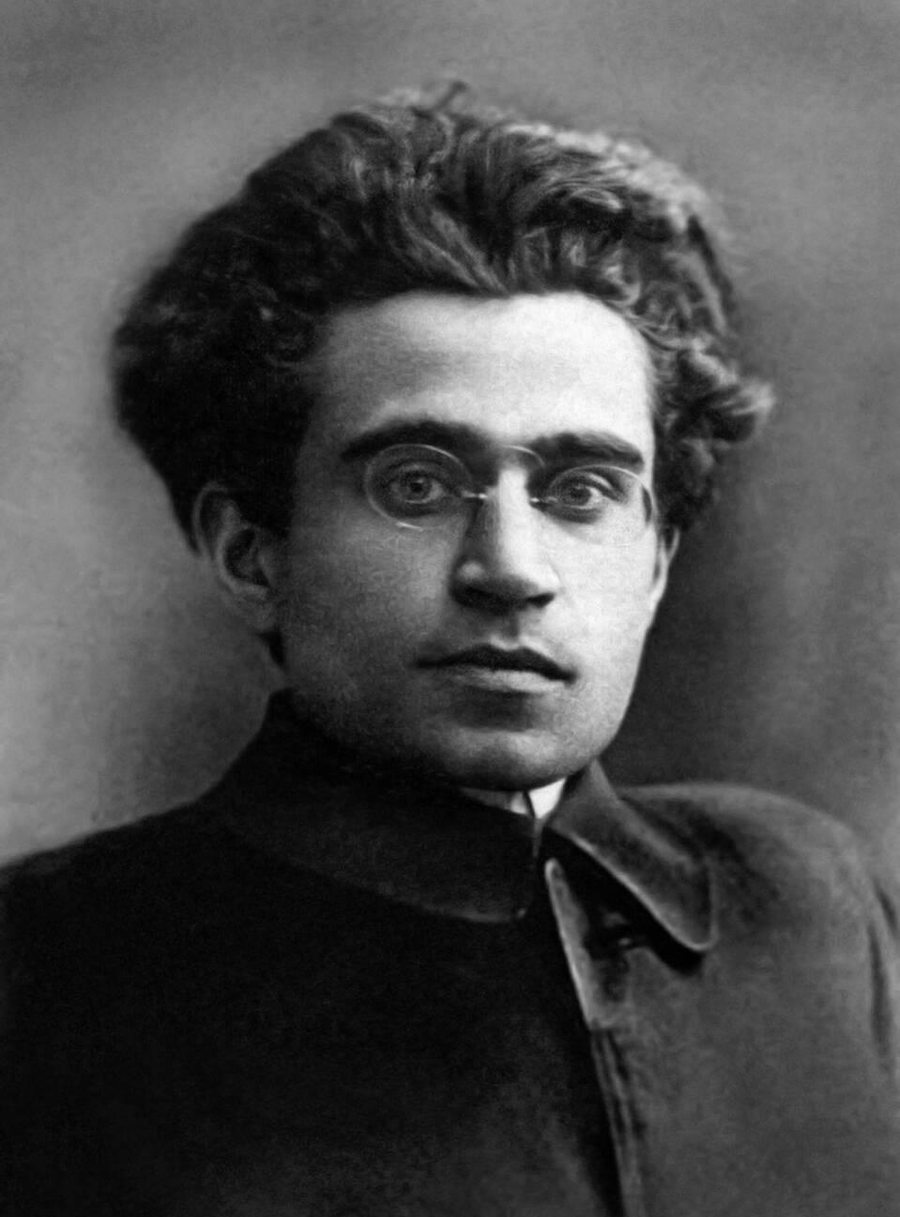

The turn to culture begins with a failure.
The revolution was supposed to be global. Marx had said the workers of the world would rise, and in 1917 they rose in Russia, and then they stopped.
Germany was the disappointment that mattered. Germany had the largest industrial working class in Europe, the best organized unions, a mass Marxist party. Germany was supposed to be next. Between 1918 and 1923 the German left tried again and again to take the country, and the German workers declined to follow.
In 1923, in the wreckage of that failure, a young man named Felix Weil used his father's grain fortune to endow a research institute at the University of Frankfurt. Its founders had wanted to call it the Institute for Marxism and thought better of it, so it became the Institute for Social Research. Its purpose was to answer one question: why had the workers not risen?
The problem was not economic. The economics were as Marx had described. The problem was that the workers no longer wanted what Marx said they would want.
Something in the culture had gotten inside them, in their habits and their entertainments and their sense of what was ordinary, and had made them content with a world that was robbing them. The revolution had failed in the mind before it failed in the street.
If that reading was right, the target had to move. You could not win the factory until you had won the culture that made the factory seem inevitable.
At almost the same moment, in a fascist prison in Italy, Antonio Gramsci was reaching the same conclusion by a different road. He had watched his own revolution fail and was writing to understand it. The West, he decided, was different. In Russia the state stood alone and could be stormed. In the West it sat behind something deeper: schools, churches, newspapers, unions, professions, all the ordinary institutions through which people learn what to think without noticing they are learning it.
"The superstructures of civil society are like the trench-systems of modern warfare."1
Nobody charges a trench. You take it over years, one position at a time. Gramsci was direct about the prize: "in politics the 'war of position', once won, is decisive definitively."2
He also named the ground he thought would decide that war.
"The education system is the instrument through which intellectuals of various levels are elaborated."3
Win the place where a society manufactures the people who tell it what to believe, and the rest follows in time.
Neither man saw any of it. Gramsci died in custody in 1937. The Institute was Jewish and Marxist in Germany in 1933, which left it no future at all, and its members ran.
Gramsci and the Institute were never one story. The Frankfurt exiles arrived in America in person, in the 1930s, and started publishing in English almost at once.
Gramsci's notebooks stayed in a drawer. They did not appear in Italy until 1948. No substantial English version existed until an American, Carl Marzani, translated sixty-four pages of him in the late 1950s. The edition quoted above did not exist until 1971.4 For thirty years after his death he was, outside Italy, a name.
The two lines did not converge at the source. They arrived separately, decades apart, and met much later in America.
Sources
Every quotation was read in the document it comes from. Where editions differ, the edition consulted is named.
- Selections from the Prison NotebooksLawrence and Wishart, LondonFull citationAntonio Gramsci, Selections from the Prison Notebooks, trans. and ed. Quintin Hoare and Geoffrey Nowell Smith, International Publishers, 1971, page 235. Movement source. ↩
- Selections from the Prison NotebooksLawrence and Wishart, LondonFull citationGramsci, Selections from the Prison Notebooks, Hoare and Nowell Smith edition, page 239. Movement source. ↩
- Full citationThe Gramsci Reader: Selected Writings 1916-1935, ed. David Forgacs. Forgacs renders the line "The education system is the instrument"; the Hoare and Nowell Smith edition renders it "School is the instrument." The Forgacs wording is quoted because it is the one verified. Movement source. ↩
- The Open Marxism of Antonio GramsciCameron Associates, New YorkFull citationPublication chronology. The Prison Notebooks first appeared from Einaudi in six thematically edited volumes between 1948 and 1951. The first American edition was Carl Marzani's sixty-four-page annotated selection, The Open Marxism of Antonio Gramsci, Cameron Associates, New York, 1957: secondary sources date it variously to 1957, 1958 and 1959, but Marzani's own memoir reproduces the title page and settles it. Marzani writes that he takes great pride in being the first to translate Gramsci from Italian into English; Hobsbawm credits Louis Marks's The Modern Prince, London 1956, as probably the first selection of Gramsci's writings in a non-Italian language, a year earlier. The archive holds both accounts and neither the Marks volume, so it reports the conflict rather than settling it: Marzani is first in America, and the plain claim of first in English does not survive Hobsbawm. The Hoare and Nowell Smith Selections, quoted earlier in this article, appeared in 1971. Chronology drawn from Eric Hobsbawm's account of the reception in How to Change the World and from Geoff Eley, "Reading Gramsci in English," 1984. ↩